
You spent months building your website. The traffic was growing, leads were coming in, and things were finally clicking. Then one Monday morning, you check Google Search Console, and it looks like someone flipped a switch overnight. Rankings dropped. Organic traffic is down 30%. No warning. No explanation.
Sound familiar? You just experienced the aftermath of a Google algorithm update.
Google algorithm updates are the single most misunderstood force in digital marketing. Businesses panic, SEO experts scramble, and a lot of bad advice gets passed around. What most people don’t realise is that these updates follow a pattern, and if you understand that pattern, you can actually use them to your advantage rather than fear them.
What Exactly Are Google Algorithm Updates?
Google’s algorithm is a complex system of rules and signals that determines which pages rank where for any given search query. It accounts for hundreds of factors, including content relevance, page speed, backlink quality, user experience, E-E-A-T (Experience, Expertise, Authoritativeness, Trustworthiness), and much more.
Now, Google doesn’t keep this algorithm frozen. It updates it constantly, sometimes hundreds of times a year through minor tweaks, and several times a year through major, broad core updates that can dramatically shift rankings across entire industries.
These Google algorithm updates aren’t arbitrary. Each one reflects Google’s evolving understanding of what a quality search result looks like. The goal has always been the same: serve the most relevant, trustworthy, and useful content to the person searching.
Types of Google Algorithm Updates You Should Know
Core Updates: The big ones. Broad core updates affect rankings across all industries and regions. Google rolls these out a few times a year, and they tend to cause the most noise. Sites can see significant gains or losses almost overnight.
Spam Updates: These target manipulative SEO tactics, keyword stuffing, spammy backlinks, cloaking, and other black-hat practices. If your strategy leans on shortcuts, spam updates will find you.
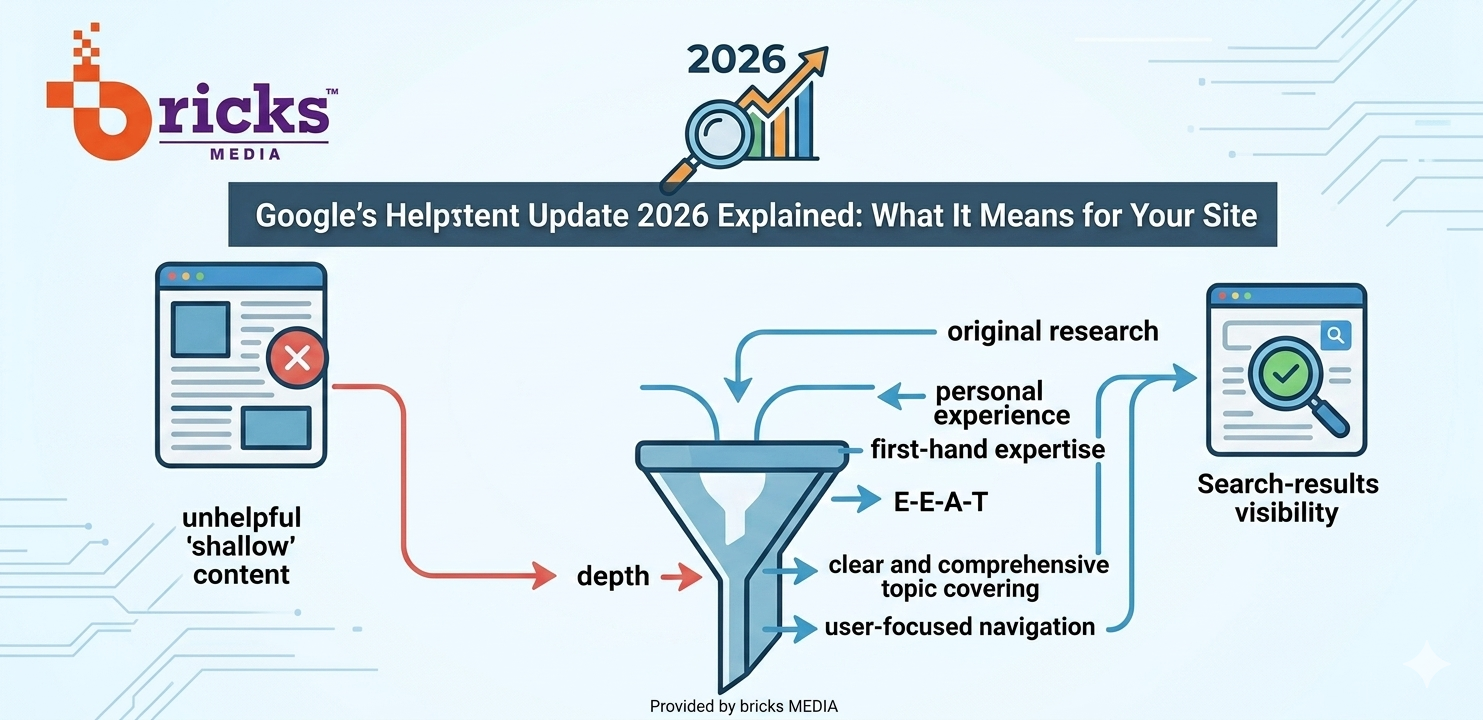
Helpful Content Updates: Introduced to reward content written genuinely for people, not for search engines. Sites with thin, AI-generated, or clickbait-heavy content have taken consistent hits from this update.
Page Experience / Core Web Vitals Updates: These focus on how your website actually feels to a real user, load time, interactivity, and visual stability. Slow, janky websites lose ground here regardless of how good their content is.
Local Search Updates: Specifically affecting Google Maps and local pack results. Businesses relying on “near me” searches need to pay close attention to these.
Why Does Your Ranking Drop After a Google Update?
Here’s where things get interesting, and often misread. When a Google algorithm update rolls out, a ranking drop doesn’t necessarily mean you did something wrong. Sometimes it simply means competitors’ pages have improved while yours has stayed the same.
That said, there are common patterns we’ve seen across client sites that tend to get hit harder:
Thin content: Pages that exist purely to rank for a keyword but offer little real value to the reader. Google is getting better at identifying pages that answer a query without actually helping anyone.
Over-optimised pages: Yes, over-optimisation is a real thing. If your page reads like it was written for a search engine, with keyword repetition, unnatural phrasing, and forced internal linking, it tends to get penalised over time.
Poor backlink profiles: A lot of low-quality, spammy links pointing to your site is a red flag. Quality still beats quantity, always.
Slow or broken technical infrastructure: Core Web Vitals are no longer optional. A website that takes 6 seconds to load or shifts layout while loading will lose ground to faster, cleaner competitors.
Lack of E-E-A-T signals: Especially in industries like finance, healthcare, and legal services, Google places heavy weight on who is behind the content. Anonymous, unverified content on sensitive topics struggles to rank after an update.
What Stays Stable Across Every Google Algorithm Update
Through every update, one thing has never changed: Google rewards websites that genuinely serve their users.
In our experience working with businesses across industries, from spas in Dubai to solar companies in Mumbai, the sites that consistently hold or improve their rankings after algorithm updates share a few qualities:
They publish content that answers real questions in depth. Not just the surface-level stuff, but the follow-up questions a real person would have. They’re technically sound, fast-loading, mobile-friendly, and easy to navigate. Their backlinks are earned through credibility, not shortcuts. And they demonstrate genuine expertise in their niche.
None of that is new. But what changes with each update is how precisely Google can distinguish between a site that does these things well and one that only appears to do so.
How to Recover If a Google Algorithm Update Has Hit Your Site
First, don’t make reactive changes immediately after an update rolls out. Google often takes days or even weeks to fully process and stabilise ranking shifts. What looks like a permanent drop might correct itself once the dust settles.
If the drop persists, here’s a structured approach:
Step 1: Identify what changed: Use Google Search Console to pinpoint which pages lost ranking. Look for patterns, is it blog posts? Service pages? Product listings? Understanding the pattern tells you the type of issue.
Step 2: Audit your content quality: Go through the affected pages honestly. Does this content genuinely help the reader? Is it outdated? Does it add anything beyond what’s already on the first page of results?
Step 3: Review your backlink profile. Tools like Google Search Console and SEMrush can help identify toxic or irrelevant backlinks. Disavow what needs to be disavowed, and start building quality links through genuine digital PR and outreach.
Step 4: Fix technical issues by running a Core Web Vitals check. Audit for crawl errors, broken links, duplicate content, and missing schema markup. Technical SEO often gets neglected until it becomes a crisis.
Step 5: Be patient and consistent: Recovery from a major core update typically takes 1 to 3 months of steady improvement. There’s no shortcut here.
Staying Ahead of Google Algorithm Updates, Not Just Reacting to Them
The businesses that treat Google algorithm updates as crises are the ones constantly playing catch-up. The businesses that treat each update as a benchmark check are the ones that grow steadily year over year.
What does that look like in practice? It means running quarterly content audits rather than updating pages only when rankings drop. It means monitoring Core Web Vitals consistently, not just when there’s a performance complaint. It means building a backlink strategy rooted in credibility rather than volume.
It also means keeping up with what Google actually says, through the Google Search Central Blog, official developer documentation, and credible SEO sources that track update patterns across industries.
Here’s an uncomfortable truth: most businesses that get hit by Google algorithm updates were showing warning signs months before the update rolled out. The update didn’t create the problem; it just surfaced it.
Final Thoughts
Google algorithm updates will keep coming. The search landscape will continue shifting. But the fundamentals, quality content, technical reliability, earned credibility, and genuine user value, aren’t going anywhere.
The question isn’t whether your website can withstand the next Google algorithm update. The question is whether your current digital strategy is built to benefit from it.
If you’re not sure where your site stands, or you’ve already taken a ranking hit and aren’t sure what to do next, that’s exactly the kind of challenge Bricks Media works through every day. From technical SEO audits to content strategy and link building, we build the kind of foundations that hold across updates, not just in between them.